
The finance ministry and RBI must get less conservative and improve co-ordination.
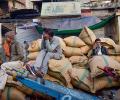
Fitch Ratings on Wednesday cut India's growth forecast to 10 per cent for the current fiscal, from 12.8 per cent estimated earlier, due to slowing recovery post second wave of COVID-19, and said rapid vaccination could support a sustainable revival in business and consumer confidence. In a report, the global rating agency said the challenges for banking sector posed by the coronavirus pandemic have increased due to a virulent second wave in the first quarter of the financial year ending March 2022 (FY22). "Fitch Ratings revised down India's real GDP for FY22 by 280bp to 10 per cent, underlining our belief that renewed restrictions have slowed recovery efforts and left banks with a moderately worse outlook for business and revenue generation in FY22," it said. Fitch believes that rapid vaccination could support a sustainable revival in business and consumer confidence; however, without it, economic recovery would remain vulnerable to further waves and lockdowns.

The prime minister took no names but made an apparent reference to reports about "rate card" for different government jobs in the Trinamool Congress-ruled West Bengal and prevalence of "cut money" in the state.

Spiralling prices pinched the pocket of consumer as edible oil, fuel and many other commodities turned dearer this year amid pandemic-induced disruptions but the inflationary pressure is anticipated to ease, though marginally, in the coming months. As consumers, at retail as well as wholesale levels, are willy-nilly learning to live with the new normal of curbs to contain the spread of coronavirus infections, experts are of the view that elevated inflation is likely to stay longer. After dealing with the devastating blows from the second COVID wave, especially during the April-June period, the economy is well on the revival path but the emergence of Omicron might unsettle the recovery trajectory in the short term.

Th report predicted that the world population is to reach eight billion by mid-November 2022.

India must formulate a new growth path to become a top Asian economy.

The recovering valuations, will lead to enhanced optimism among investors about funding startups.

Shares of small-cap companies have been on a roll with the S&P BSE Small-Cap index hitting a new high in intra-day deals on Thursday. The rally has been fueled by an up move in stocks of chemicals, cement, graphite electrode makers, pharmaceuticals and information technology (IT) shares. In the past two weeks, since March 25, the index has outperformed the market by gaining 7.3 per cent. In comparison, the S&P BSE Midcap index was up 6.1 per cent, while the S&P BSE Sensex gained 3.6 per cent during the same period.

Nearly 25 million jobs could be lost worldwide due to the coronavirus pandemic, but an internationally coordinated policy response can help lower the impact on global unemployment, according to a UN agency. In its preliminary assessment report titled 'COVID-19 and world of work: Impacts and responses', the International Labour Organization (ILO) calls for urgent, large-scale and coordinated measures across three pillars -- protecting workers in the workplace, stimulating the economy and employment, and supporting jobs and incomes.
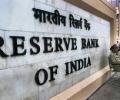
The Reserve Bank of India is likely to cut policy rates by 0.25 per cent and keep the cash reserve ratio unchanged at its policy review next week, on the back of slower-than-expected growth and more encouraging inflation readings, says a report by HSBC.

A weaker Russia, a sobered China at a time when Xi Jinping is manoeuvring to protect his third term prospects, a reunited West, a chaotic Pakistan. This is a perfect set of strategic circumstances. It is for India now to consummate this historic opportunity, argues Shekhar Gupta.
'The outlook for private investment, which has been such a weak link for India for so long, remains challenging.'

'India finds itself in an unenviable situation today with its prospects diminished by acutely polarised domestic politics and the setbacks suffered during the pandemic,' notes Ambassador Shyam Saran, the former foreign secretary.

The Modi government finds itself in a contradiction of its own making. It has encouraged pro-Russian, Westophobic public sentiment while setting strategic policy that's exactly the opposite, points out Shekhar Gupta.

Investors' wealth zoomed by Rs 5,78,634.72 crore in two days of intense market rally, with participants adding Rs 2,74,908.83 crore to their fortune on Tuesday. Over the past two sessions, the BSE gauge Sensex has gained about 1,461 points or 2.99 per cent. The benchmark rallied 612.60 points or 1.24 per cent to settle above the 50,000-mark on Tuesday. Following the two-day massive rallies, the market capitalisation of BSE-listed companies jumped by Rs 5,78,634.72 crore to a record Rs 2,16,39,367.91 crore on Tuesday.

Nestle India was the top laggard in the Sensex pack, shedding around 2 per cent, followed by SBI, HDFC Bank, Axis Bank, ICICI Bank, Reliance Industries, HUL and Dr Reddy's. NSE Nifty slipped 20.10 points to 15,670.25.

The fault line between the West and Russia has widened into a deep chasm and this is likely to endure in the foreseeable future. Far from forcing its way into the European tent, Russia may be reduced to the status of an even more sullen and weakened bystander on its periphery. The US appears to have won this hand with little cost to itself, observes former foreign secretary Shyam Saran.

Asian Paints was the top gainer in the Sensex pack, rising around 3 per cent, followed by Kotak Bank, Axis Bank, HDFC Bank, Infosys, Reliance Industries and ITC. Broader NSE Nifty rallied 136.15 points or 1.02 per cent to its new record high of 13,529.10.
Skittish investors snapped up gold and other safe-haven assets amid fears of a global economic slowdown

93 per cent Indians expect to see modest or substantial top-line growth at their companies.
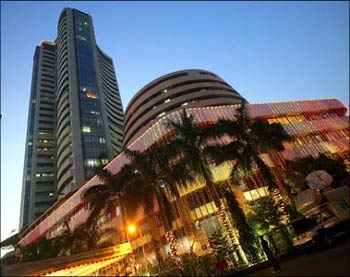
It will be difficult for the Indian equity to outperform overall growth to the extent bullish observers expect.

As the largest producer of vaccines in the world, with 60 per cent of the global share, India is well-positioned to use its existing manufacturing capabilities to contribute to mass vaccine production and distribution needs for other countries in addition to meeting its domestic requirements, said Moody's.
"We are facing a global health crisis unlike any in the 75-year history of the United Nations -- one that is killing people, spreading human suffering, and upending people's lives. But this is much more than a health crisis. It is a human crisis," Guterres said.

IMF Chief Economist Gita Gopinath also said the pickup in global growth for 2020 remains highly uncertain as it relies on improved growth outcomes for stressed economies like Argentina, Iran, and Turkey and for under-performing emerging and developing economies such as Brazil, India, and Mexico.

As the ice-covered parts of the Arctic Ocean melt due to climate change, China has flagged its interest to take part in building 'Polar Silk Road', raising prospects for the emergence of a new sea route.
The marginal increase in absorption is expected to be accompanied by a drop in the number of new launches by 8 per cent to 72,113 units during 2014.

Moody's on Monday slashed India's growth forecast for 2020 to 5.4 per cent from 6.6 per cent projected earlier, on slower than expected economic recovery. In its update on Global Macro Outlook, Moody's Investors Service said India's economy has decelerated rapidly over the last 2 years and economic recovery is likely to be 'shallow'.

With domestic retail fuel prices jumping to record high on rising international oil rates, India on Thursday pressed oil cartel OPEC for 'affordable' oil price within a 'reasonable band' and that the producers should phase out production cuts. OPEC nations such as Saudi Arabia have traditionally been India's principal oil source. But, OPEC and its allies, called OPEC+, ignoring its call for ease supply curbs had led to the world's third-biggest oil importer tap newer sources to diversify its crude oil imports. As a result, OPEC's share in India's oil imports has dropped to about 60 per cent in May from 74 per cent in the previous month.

More than 3,71,500 babies were born worldwide on New Year's Day and India is estimated to have recorded the highest number of births at around 60,000, according to the United Nations' children's agency.
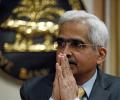
Uncertainty is emerging as the only certainty, said RBI Governor Shaktikanta Das as he emphasised on continued policy support at the December MPC meet during which members expressed concerns over spread of the Omicron variant of coronavirus, as per the minutes of the rate-setting panel released on Wednesday. After three days of deliberations, the six members of the Monetary Policy Committee (MPC) on December 8 unanimously voted for status quo on policy rates for the ninth consecutive time. At the meeting, the RBI Governor said risks stalking the global economy have amplified with rapid spread of the virus mutations, including the Omicron variant, leading to countries scrambling for restrictions.

Benchmark stock indices Sensex and Nifty tumbled nearly 1 per cent on Wednesday due to profit booking in banking, financial and IT stocks after a recent rally. The 30-share BSE Sensex plunged 537.22 points or 0.94 per cent to end at 56,819.39 as 24 of its stocks declined. During the day, it tanked 772.57 points or 1.34 per cent to touch a low of 56,584.04. The broader NSE Nifty declined by 162.40 points or 0.94 per cent to 17,038.40 with 39 of its constituents ending in the red. Bajaj Finance was the biggest loser among Sensex stocks, dropping by 7.24 per cent.

UBS, Credit Suisse see emerging markets doing well next year, but expect India to underperform, given its rich valuations.

In India, total employment grew by only 0.1 per cent yearly over the five years till 2009-10, says the report, "from 457.9 million in 2004-05 to 458.4 mn in 2009-10, while labour productivity grew 34 per cent over this period".

The demand for gold has bounced back sharply in India from the lows seen in 2020 because of the outbreak of the Covid-19 pandemic, and has even beaten the pre-pandemic level. In the September quarter, the demand for gold jumped 47 per cent year-on-year (YoY) to 139.1 tonnes, as against 94.6 tonnes in the year-ago period, and higher than the 123.9 tonnes recorded in the pre-pandemic September 2019 quarter, the World Gold Council (WGC) said in its latest release. In value terms, demand surged 37 per cent year-on-year (YoY) to Rs 59,330 crore during the quarter.

The Survey shows fiscal consolidation despite slowdown in growth.

2014 was a year for downturn for most economies across the globe.

At the same time, the UN said in a report, the performance of private investment remains a key macroeconomic concern.

A hallmark of some new businesses today is that they seek to use the brute force of capital, combined with smart technology and operations, to create new needs that you didn't even know existed, the chairman of Aditya Birla group said in a blog post on the trends for the new year.

Hitting back at former prime minister Manmohan Singh for his criticism of the Modi government's handling of the economy, Finance Minister Nirmala Sitharaman on Thursday said he is more remembered for having brought India to "fragile five" and rampant inflation during his term.

'This is a period of significant uncertainty, of unknown unknowns.'
